
Since 1983‚ the five-speed manual transmission in the Fox-body Mustang has become the gold standard for late-model Mustang gearboxes‚ offering a uniquely engaging driving experience.
Historical Overview of Mustang Transmissions
Early Mustangs (1964 ½ ─ 1973) primarily featured three- and four-speed manual transmissions‚ alongside automatic options. The focus was less on performance shifting and more on everyday usability. As the Mustang evolved through the Fox body era (1979-1993)‚ a significant shift occurred. The introduction of the five-speed manual in 1983‚ specifically within the SVO and later GT models‚ marked a turning point.
This five-speed‚ initially a Borg-Warner T-5‚ provided a more connected driving experience. Subsequent generations saw Ford experimenting with different suppliers and designs‚ including Tremec. The late 1990s and early 2000s brought the Tremec TR-3650‚ known for its robustness. Later iterations‚ like the MT-82 and its Getrag variant‚ aimed for refinement‚ though faced some reliability concerns. Today’s Mustangs continue this legacy‚ offering modern manual options like the Tremec TR-3160‚ blending performance with driver engagement.
Why Choose a Manual Transmission Mustang?
Opting for a manual transmission Mustang delivers a uniquely engaging driving experience that automatic transmissions simply can’t replicate. It places the driver firmly in control‚ fostering a deeper connection with the car and the road. Beyond the visceral thrill‚ a manual gearbox allows for precise gear selection‚ maximizing performance and efficiency.
Enthusiasts often prefer manuals for their ability to downshift for engine braking‚ enhancing control during spirited driving or challenging conditions. Furthermore‚ manual Mustangs often command a higher resale value among collectors and performance-minded buyers. While modern automatics are sophisticated‚ the raw‚ direct feel of a well-executed manual shift remains a compelling reason for many Mustang drivers to choose three pedals over two.

Types of Manual Transmissions in Mustangs
Throughout Mustang’s history‚ several manual transmissions have been utilized‚ including the T-5‚ Tremec TR-3650‚ T-45‚ MT-82‚ and the modern TR-3160‚ each with unique characteristics.
T-5 Transmission (1982-1993)
The T-5 transmission marked a significant shift for the Mustang‚ appearing first in 1982 and becoming standard for the 1983-1993 Fox-body models. This five-speed manual gearbox replaced the earlier four-speed units‚ offering improved fuel economy and a more engaging driving experience. Initially‚ it was somewhat fragile‚ particularly behind the powerful 5.0L engines‚ leading to concerns about durability.
However‚ Ford and Borg-Warner‚ the manufacturer‚ made continuous improvements throughout its production run. Later versions of the T-5 were significantly stronger‚ featuring upgraded gears and components. Identifying the specific T-5 variant is crucial‚ as earlier models require more cautious use with high-horsepower applications. Despite its initial weaknesses‚ the T-5 remains a popular and relatively affordable choice for classic Mustang restorations and modifications‚ offering a classic feel and reasonable performance.
Tremec TR-3650 (1994-2001)
The Tremec TR-3650 arrived with the SN-95 Mustang in 1994‚ representing a substantial upgrade over the earlier T-5 transmission. This five-speed manual was designed to handle the increased power output of the 5.0L and later 4.6L engines. It featured stronger internal components and a more robust design‚ addressing many of the durability concerns associated with the T-5.
However‚ the TR-3650 wasn’t without its issues. Many owners reported problems with 3rd-4th gear synchro wear‚ leading to grinding during shifts. Despite this‚ it remained the factory manual transmission for several years and is still a popular choice for upgrades in older Mustangs. Its stronger construction makes it a more reliable option for modified engines‚ though preventative maintenance and careful driving are recommended to avoid synchro-related problems.

Tremec T-45 (2001-2010)
Replacing the TR-3650 in 2001‚ the Tremec T-45 aimed to improve upon its predecessor‚ offering increased strength and refinement. It continued to be a five-speed manual transmission‚ utilized throughout the SN-95 and early D2 (New Edge) Mustang generations. The T-45 boasted stronger gears and a revised case design‚ enhancing its ability to withstand higher horsepower and torque levels.
Despite these improvements‚ the T-45 also faced criticism. Some owners experienced issues with a notchy shift feel and continued synchro wear‚ particularly in 3rd and 4th gear. While generally more durable than the TR-3650‚ proper maintenance and fluid changes were crucial for longevity. The T-45 remains a viable option for those seeking a robust manual transmission for their early 2000s Mustang‚ especially with mindful driving habits.
MT-82 (2011-2017)
The fifth-generation Mustang’s 2011 update brought the MT-82 six-speed manual transmission‚ replacing the Tremec TR-3650. This change‚ however‚ proved controversial among Mustang enthusiasts. While offering an additional gear for improved highway cruising and fuel efficiency‚ the MT-82 was often criticized for its vague shift feel and susceptibility to internal failures.
Common complaints included difficulty finding gears‚ especially during spirited driving‚ and reports of cracked or broken shift forks. Ford issued several revisions throughout the production run‚ attempting to address these issues‚ but the MT-82’s reputation remained tarnished. Despite its shortcomings‚ the MT-82 is still found in many 2011-2017 Mustangs‚ and upgrades are available to improve its performance and reliability.
Getrag MT82 (2011-2017 ─ Detailed)
The MT-82‚ manufactured by Getrag‚ was intended as a cost-effective and efficient upgrade for the 2011-2017 Mustang. However‚ its implementation faced significant criticism. The transmission’s design‚ while offering six speeds‚ utilized thinner synchronizers and a weaker shift fork material compared to its predecessor‚ the Tremec TR-3650.
This resulted in frequent reports of 3rd-4th gear synchro wear and fork failures‚ particularly in Mustangs subjected to aggressive driving. Ford released several updates – denoted by different casting numbers – attempting to rectify these weaknesses‚ but complete resolution proved elusive. Enthusiasts often recommend aftermarket upgrades‚ such as stronger shift forks and improved synchronizers‚ to enhance the MT-82’s durability and driving experience. Identifying the transmission’s production date via its casting number is crucial when considering upgrades or repairs.
Tremec TR-3160 (2018-Present)
Introduced with the S550 Mustang in 2018‚ the Tremec TR-3160 represents a significant improvement in manual transmission durability and feel. This six-speed gearbox addresses many of the concerns leveled against the MT-82‚ featuring stronger internal components and a more robust design overall. It’s notably heavier duty‚ capable of handling increased power output from modern Mustang engines.
The TR-3160 boasts improved shift quality and a more positive engagement‚ enhancing the driving experience. While generally reliable‚ preventative maintenance‚ like proper fluid changes‚ remains essential. Aftermarket support for the TR-3160 is growing‚ with options for short-throw shifters and upgraded clutches readily available for those seeking further performance enhancements. It’s currently the standard manual transmission offering in newer Mustang models.

Common Issues with Mustang Manual Transmissions
Mustang manual transmissions can experience synchro problems‚ shifter misalignment‚ clutch failures (master/slave cylinders)‚ throw-out bearing issues‚ and internal gear wear over time.
Synchro Problems
Synchro problems are a frequently reported issue within the Mustang manual transmission community‚ particularly affecting older T-5 and Tremec transmissions. Synchronizers‚ or “synchros‚” are crucial components responsible for matching the speeds of the gears before engagement‚ enabling smooth shifting. When synchros wear‚ they struggle to perform this function effectively.
This manifests as grinding during shifts‚ especially into specific gears – often second or third. Difficulty engaging a gear‚ or a double-clutching sensation even with a healthy clutch‚ can also indicate worn synchros. The severity can range from a slight annoyance to a complete inability to shift into a gear. Ignoring the issue will lead to further damage to the gears themselves‚ escalating repair costs significantly. Regular fluid changes and proper shifting technique can help prolong synchro life‚ but eventual replacement is often necessary.
Shifter Issues & Adjustments
Many Mustang manual transmission complaints center around shifter feel and precision. Issues can range from sloppy‚ vague engagement to excessive play or even difficulty selecting certain gears. Often‚ these problems aren’t due to internal transmission failure‚ but rather improper shifter adjustment or worn shifter components.
Mustang shifters typically utilize adjustable linkages‚ allowing for fine-tuning to achieve optimal feel. Common adjustments involve altering the linkage stops to eliminate excessive travel or binding. Worn shifter bushings contribute significantly to looseness; replacing these inexpensive parts can dramatically improve shifter feel. Inspecting the shift linkage for wear or damage is also crucial. If adjustments don’t resolve the issue‚ the shifter itself may be faulty and require replacement. Proper adjustment ensures accurate gear selection and a more enjoyable driving experience.
Clutch Problems (Master/Slave Cylinder)
Hydraulic clutch systems‚ common in many Mustangs‚ rely on a master cylinder and a slave cylinder to transmit force from the pedal to the clutch fork. A frequent source of manual transmission issues stems from failures within this hydraulic system. Symptoms include a spongy pedal feel‚ difficulty engaging gears‚ or the inability to fully disengage the clutch.
Master cylinders can develop internal leaks‚ reducing pressure and causing pedal feel issues. Slave cylinders‚ often located within the transmission bellhousing‚ are prone to leaking or sticking. Air in the hydraulic lines also contributes to poor performance. Bleeding the system is essential to remove air. Replacement of either the master or slave cylinder is often necessary when leaks or internal damage occur. Ignoring these issues can lead to further transmission damage and costly repairs.
Throw-Out Bearing Failure
The throw-out bearing (also known as a release bearing) is a critical component in a manual Mustang transmission‚ responsible for disengaging the clutch when the pedal is pressed. This bearing experiences significant stress and wear during each clutch engagement. A failing throw-out bearing typically announces itself with a whining‚ squealing‚ or grinding noise‚ especially when the clutch pedal is depressed.
The noise often changes with pedal position. Ignoring this symptom can lead to complete bearing failure‚ rendering the clutch unusable and potentially causing damage to the pressure plate and flywheel. Replacement requires transmission removal and is often performed concurrently with a clutch replacement to minimize labor costs. Regular inspection during clutch service is recommended to identify early signs of wear and prevent catastrophic failure.
Internal Gear Wear
Over time‚ the internal gears within a Mustang’s manual transmission are subject to wear due to constant meshing and the stresses of power transfer. This wear manifests as pitting‚ rounding of gear teeth‚ and increased clearances. Early signs include difficulty shifting‚ especially into specific gears‚ accompanied by grinding or clunking noises. Ignoring this issue leads to progressively worse performance and eventual transmission failure.
Severe gear wear can generate metal shavings that contaminate the transmission fluid‚ accelerating further damage. Addressing internal gear wear typically requires a complete transmission rebuild‚ involving disassembly‚ inspection‚ and replacement of worn components. Preventative maintenance‚ including regular fluid changes with the correct specification‚ is crucial to minimize gear wear and prolong transmission life.

Maintenance and Repair
Regular fluid checks‚ timely clutch replacements‚ and precise shifter adjustments are vital for maintaining a Mustang’s manual transmission‚ ensuring smooth operation and longevity.
Fluid Changes & Types
Maintaining the correct fluid level and type is paramount for a healthy Mustang manual transmission. Over time‚ transmission fluid degrades‚ losing its lubricating properties and ability to protect gears. Regular fluid changes – typically every 30‚000 to 60‚000 miles‚ depending on driving conditions – are crucial.
Historically‚ Mustangs have utilized various fluid types. Earlier models (like those with the T-5) often specified a GL-4 gear oil‚ while later transmissions‚ particularly the Tremec units‚ frequently require a specific synthetic GL-5 fluid. Using the incorrect fluid can lead to synchro failure and other costly damage.
Always consult your Mustang’s owner’s manual or a trusted parts supplier to determine the precise fluid specification for your specific transmission model. Many enthusiasts now prefer high-quality synthetic fluids for their superior performance and extended service life. When changing the fluid‚ ensure proper disposal of the old fluid according to local regulations.
Clutch Replacement Procedures
Replacing a Mustang’s clutch is a moderately complex procedure‚ often undertaken when experiencing slippage or difficulty shifting. It generally involves disconnecting the driveshaft‚ exhaust‚ and various linkages. The transmission must then be removed to access the clutch assembly;
Before removal‚ carefully mark the position of components for reassembly. Inspect the flywheel for wear or damage; resurfacing or replacement may be necessary. Aligning the clutch disc properly with the pilot bearing is critical‚ often aided by a clutch alignment tool.
New throw-out bearing‚ pilot bearing‚ and potentially the master/slave cylinders are typically replaced concurrently. Reinstallation requires careful torque specifications for all bolts. Bleeding the hydraulic clutch system is essential to ensure proper operation. Always consult a repair manual for detailed instructions specific to your Mustang model.
Synchro Replacement Guide
Synchro replacement within a Mustang manual transmission is a complex undertaking‚ best suited for experienced mechanics. It requires complete transmission disassembly‚ demanding meticulous organization of parts. Accessing the synchros involves removing gears‚ shafts‚ and related components.
Carefully inspect each synchro for wear‚ damage‚ or broken teeth. Specialized tools are often needed for removal and installation‚ preventing damage to the transmission case and other internal parts. New retaining rings and clips should always be used during reassembly.
Proper lubrication is crucial during the rebuild process. Reassembly demands precise alignment and torque specifications. A detailed repair manual specific to your transmission type is absolutely essential for successful synchro replacement and overall transmission functionality.
Shifter Adjustment Techniques
Precise shifter adjustment is vital for a satisfying manual Mustang driving experience. Begin by ensuring the transmission is properly mounted and all linkage components are securely fastened. Most Mustang shifters utilize adjustable stops to fine-tune the throw and engagement points.
Loosen the adjustment screws on the shifter base‚ allowing for movement. Carefully shift through all gears‚ noting any binding or imprecise engagement. Adjust the stops incrementally‚ focusing on achieving smooth‚ direct shifts without excessive force.
Pay close attention to neutral positioning; it should be easily accessible and centered. A bent or worn shifter linkage can significantly hinder adjustment‚ requiring replacement. Regularly check and readjust as needed‚ as cable stretch or component wear can occur over time.
Troubleshooting Common Transmission Noises
Unusual noises emanating from your manual Mustang transmission often indicate underlying issues. Whining sounds during operation frequently point to worn bearings or low fluid levels – always check the fluid first! Grinding noises‚ especially during shifts‚ typically signal synchronizer problems‚ demanding prompt attention to prevent further damage.
Clunking sounds can stem from worn U-joints‚ loose shifter linkage‚ or internal gear wear. A rattling noise might indicate a loose heat shield or a failing throw-out bearing. Carefully pinpoint the source and conditions under which the noise occurs.
Distinguishing between transmission‚ clutch‚ and driveshaft noises is crucial for accurate diagnosis. Ignoring these sounds can lead to costly repairs down the line; professional inspection is recommended for persistent or severe noises.

Upgrading Your Mustang Manual Transmission
Enhance your Mustang’s performance with upgrades like short-throw shifters‚ stronger clutch kits‚ transmission mounts‚ flywheels‚ and optimized gear ratios for peak results.

Short Throw Shifters
Short throw shifters dramatically reduce the distance required to move the gear lever between gears‚ resulting in quicker‚ more precise shifts and a sportier feel. These shifters minimize wasted motion‚ allowing drivers to engage gears with increased speed and confidence. Several manufacturers offer short throw shifters for various Mustang generations‚ each with unique designs and adjustability options.
Installation typically involves replacing the factory shifter assembly with the aftermarket unit. Some shifters offer adjustable settings‚ enabling customization of shift throw length and feel to suit individual preferences. Benefits include improved driving engagement‚ faster lap times (for track use)‚ and a more connected experience behind the wheel. When selecting a short throw shifter‚ consider the intended use of the vehicle and the desired level of performance enhancement. Proper installation and adjustment are crucial for optimal operation and to avoid any potential issues with shift quality.
Stronger Clutch Kits
As engine power increases‚ the factory clutch may struggle to maintain grip‚ leading to slippage and reduced performance. Upgrading to a stronger clutch kit is essential for Mustangs undergoing performance modifications or experiencing increased torque. These kits typically include a heavy-duty pressure plate‚ a performance-grade clutch disc‚ and a release bearing designed to withstand higher loads.
Choosing the right clutch kit depends on the vehicle’s intended use. Options range from daily-driver friendly kits with moderate clamping force to aggressive kits designed for racing and high-horsepower applications. Installation requires removing the transmission and associated components‚ making it a more involved process. A stronger clutch improves power transfer‚ prevents slippage under heavy acceleration‚ and enhances overall drivetrain reliability. Consider the pedal effort increase associated with performance clutches‚ as some require significantly more force to operate.
Transmission Mount Upgrades
The factory transmission mount is often a source of unwanted movement and vibration‚ particularly in performance-driven Mustangs. Upgrading to a stiffer transmission mount significantly reduces drivetrain slop‚ improving shift precision and overall vehicle stability. These mounts are typically constructed from polyurethane or solid materials‚ offering a substantial increase in rigidity compared to the rubber factory mount.
While a stiffer mount enhances performance‚ it also transmits more vibration into the cabin. Choosing the right mount involves balancing performance gains with acceptable levels of noise and vibration. Installation is relatively straightforward‚ requiring the removal of the exhaust system and the factory mount. A transmission mount upgrade is a cost-effective way to improve the driving experience and maximize the benefits of other drivetrain modifications‚ resulting in a more connected feel.
Flywheel Options
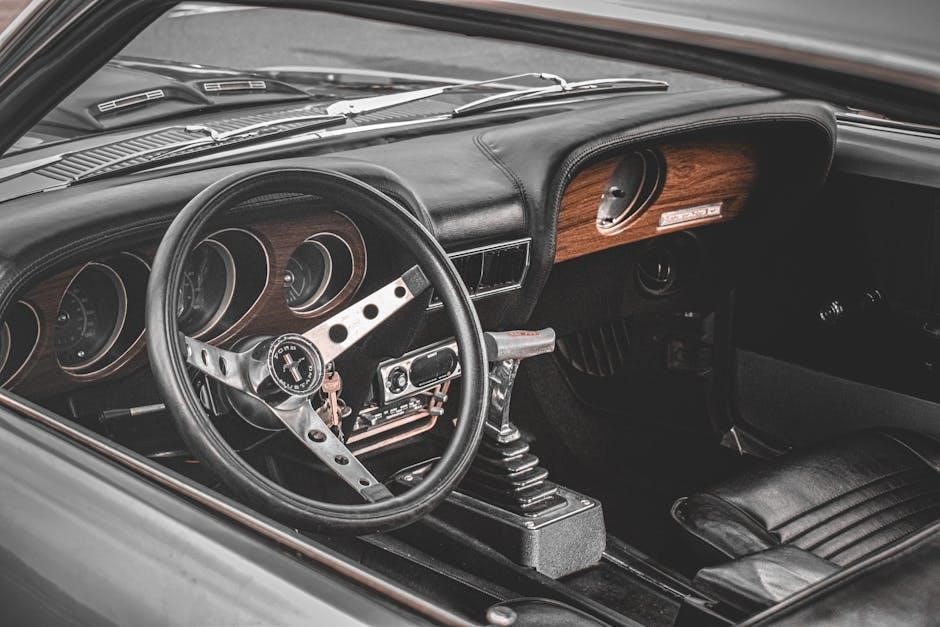
The flywheel is a critical component in a manual transmission Mustang‚ impacting everything from engine responsiveness to clutch engagement. Factory flywheels are typically dual-mass designs‚ aiming to reduce vibration‚ but can be heavier. Performance enthusiasts often opt for single-mass flywheels to reduce rotational inertia‚ resulting in quicker engine revs and improved acceleration.
Lightweight flywheels demand a more precise clutch control and can increase drivetrain noise. Steel flywheels are a common upgrade‚ offering durability and a balance of performance characteristics. Aluminum flywheels are even lighter but may wear faster. When replacing a flywheel‚ always ensure it’s properly balanced to prevent vibrations. Choosing the right flywheel depends on your driving style and performance goals‚ impacting the overall driving experience significantly.
Gear Ratio Changes
Altering gear ratios within a Mustang’s manual transmission can dramatically transform its performance characteristics. Shorter gear ratios provide quicker acceleration but reduce top speed‚ ideal for drag racing or autocross. Conversely‚ taller gear ratios enhance fuel economy and cruising comfort at highway speeds‚ sacrificing some initial acceleration.
Changing gear ratios typically involves swapping the pinion and ring gear within the differential‚ not the transmission gears themselves. Selecting the appropriate ratio depends on intended use – street driving‚ track performance‚ or a balanced compromise. Consider tire size when calculating the overall effective ratio. Professional installation and setup are crucial to ensure proper meshing and prevent premature wear or failure. Careful planning is key to achieving the desired performance outcome.
Resources for Mustang Manual Transmission Information
Online forums‚ dedicated parts suppliers‚ and comprehensive technical documentation provide invaluable support for Mustang enthusiasts seeking knowledge about manual transmission systems.
Online Forums & Communities
Mustang-specific online forums and communities represent a treasure trove of information for owners and enthusiasts of these iconic vehicles‚ particularly those focused on manual transmissions. These platforms facilitate direct interaction with experienced individuals who have firsthand knowledge of troubleshooting‚ repairs‚ and upgrades.
Popular forums often feature dedicated sections for transmission discussions‚ allowing users to search for solutions to common problems or post questions seeking expert advice. Members frequently share detailed guides‚ technical diagrams‚ and even personal experiences with specific transmission models like the T-5‚ Tremec‚ or MT-82.
Beyond problem-solving‚ these communities foster a collaborative environment where enthusiasts exchange ideas‚ discuss performance modifications‚ and share their passion for the manual Mustang experience. Active participation can significantly enhance your understanding and enjoyment of your vehicle’s transmission.
Parts Suppliers
Sourcing quality parts is crucial when maintaining‚ repairing‚ or upgrading a Mustang’s manual transmission. Several reputable suppliers specialize in Mustang components‚ offering a wide range of options to suit various budgets and performance goals.
Companies like Summit Racing‚ American Powertrain‚ and Modern Driveline are well-known for their extensive catalogs‚ including gears‚ synchros‚ clutches‚ shifters‚ and complete transmission rebuild kits. Local speed shops and Ford dealerships also provide access to genuine Ford parts and aftermarket alternatives.
When selecting a supplier‚ consider factors like product availability‚ pricing‚ shipping costs‚ and customer support. Reading reviews and comparing prices across multiple vendors is highly recommended. Ensuring the parts are specifically designed for your Mustang’s transmission model is paramount for proper fitment and reliable performance.

Technical Documentation
Comprehensive technical documentation is invaluable for anyone working on a Mustang’s manual transmission. Factory service manuals provide detailed diagrams‚ specifications‚ and step-by-step procedures for disassembly‚ repair‚ and reassembly. These manuals are often available for purchase online or through Ford dealerships.
Beyond factory manuals‚ numerous online resources offer supplemental information. Websites dedicated to Mustang restoration and performance often host technical articles‚ troubleshooting guides‚ and forum discussions. These resources can be particularly helpful for diagnosing common issues and understanding transmission operation.
Accessing exploded views‚ torque specifications‚ and wiring diagrams is essential for successful repairs. Utilizing these resources alongside practical experience ensures accurate and safe completion of any transmission work‚ maximizing longevity and performance.